EN
 AR
 BG
 HR
 CS
 NL
 FI
 FR
 DE
 EL
 HI
 IT
 JA
 KO
 NO
 PL
 PT
 RO
 RU
 ES
 TL
 IW
 ID
 VI
 HU
 TH
 TR
 FA
 MS
 UR
 HA
 JW
 LA
 MY
 KK
 TG
 UZ
 AM
 PS

Global Demand for IPEX Micro Coaxial Connectors Surges as 5G and Wi-Fi 6E Devices Shrink
As wireless modules grow more powerful and device enclosures grow thinner, one tiny component has quietly become a bottleneck—and a battleground—for product designers worldwide: the IPEX micro coaxial connector.
Commonly known in the industry as the IPEX / IPX / MHF-series connector, this miniature board-to-wire RF interface is now standard inside smartphones, laptops, wireless modules, drones, automotive telematics units and IoT sensors—anywhere an antenna must be connected to a PCB in a space measured in square millimetres.
What Is an IPEX Connector?
The IPEX connector is an ultra-miniature coaxial RF connector originally developed by Japan's I-PEX (MHF® series) and widely adopted across the industry under names such as IPEX, IPX, U.FL-compatible and MHF. It consists of an SMT receptacle soldered to the PCB and a plug crimped or terminated onto a micro-coaxial cable (typically 0.81 mm, 1.13 mm, 1.32 mm or 1.37 mm O.D.). Mated heights range from roughly 1.0 mm to 3.0 mm, with board footprints as small as 2.0 × 2.0 mm.
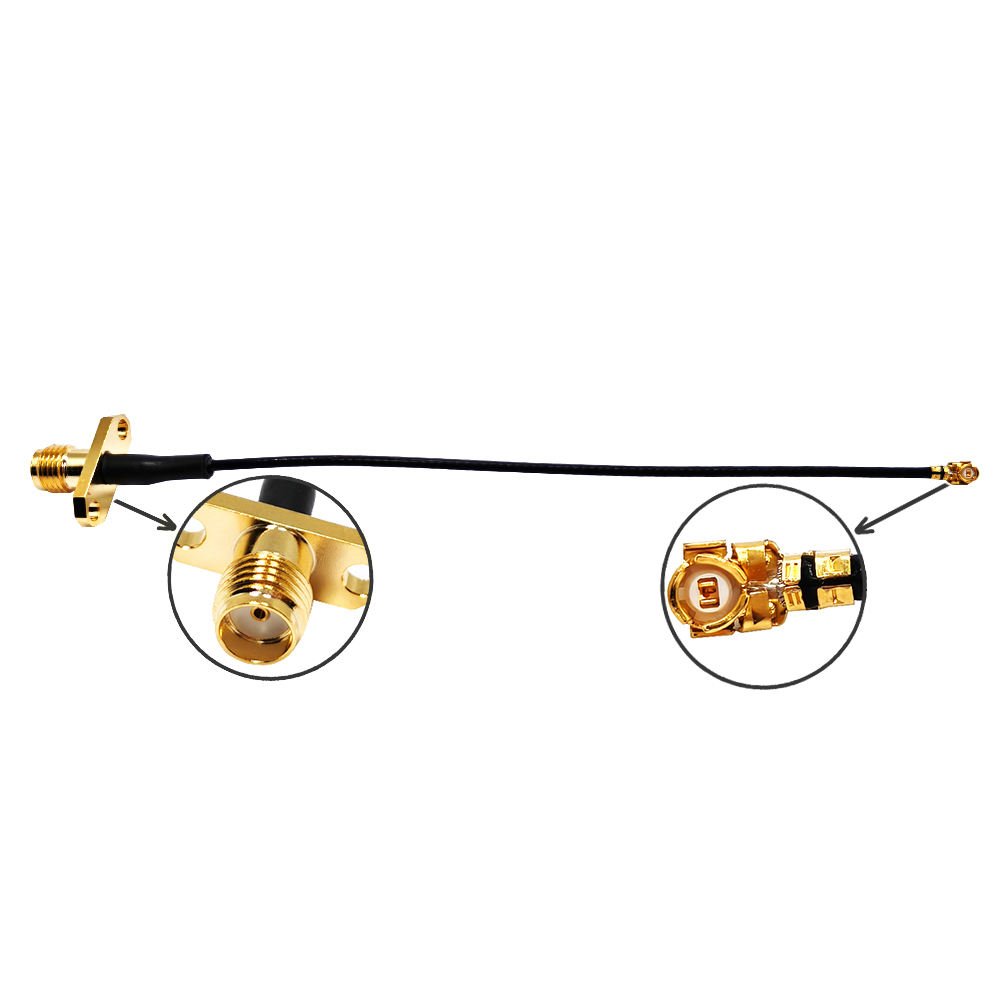
Typical electrical characteristics include:
|
Impedance |
50 Ω nominal |
|
Frequency range |
DC–6 GHz (mainstream generations) up to 9 GHz / 12 GHz / 15 GHz for advanced series |
|
VSWR |
1.3 max at lower bands; 1.5 max or better at higher bands |
|
Rated voltage |
AC 60 V; withstand voltage AC 200 V |
|
Contact resistance |
≤20 mΩ (centre), ≤10 mΩ (ground) |
|
Operating temperature |
−40 °C to +90 °C |
|
Termination |
solderless micro-coax termination (i-Fit®-type technology) on selected models |
|
Mating cycles |
limited (typically 30–50), designed for assembly and service rather than frequent disconnect |
Note: figures above are representative of the IPEX/MHF family. Always confirm the exact datasheet values for the specific generation you are sourcing.
Why Demand Is Rising Now
Three market forces are converging:
1. More antennas per device. Modern modules stack Wi-Fi 6/6E, Bluetooth, GNSS, LTE/5G sub-6 and even mmWave front ends in a single enclosure. Each radio chain needs its own feed line—which multiplies connector count while available board area shrinks.
2. Higher frequencies, tighter tolerances. As designs push past 6 GHz, insertion loss and VSWR stability at the connector become decisive. Newer generations with fully shielded structures and improved retention force are replacing legacy parts that could not hold signal integrity above 3 GHz.
3. Vibration-critical applications. Automotive telematics, dashcams, drones and industrial gateways demand locking versions (mechanical-latch or LK-type) that resist shock and vibration without increasing profile height.
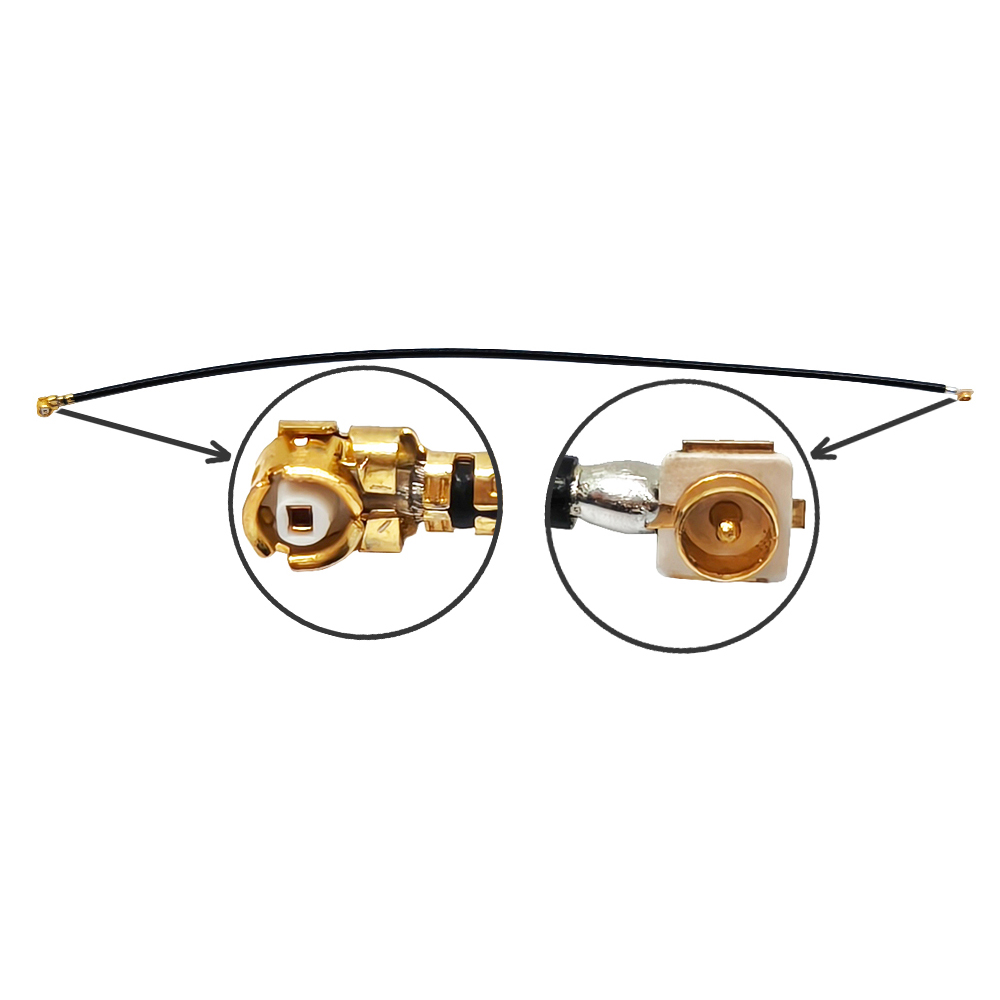
Where They're Used
|
Application |
Typical Requirement |
|
Smartphones & tablets |
Lowest profile, 0.81–1.13 mm cable |
|
Laptops / Mini-PCIe & M.2 cards |
M.2-standard height, automated SMT placement |
|
4G/5G & Wi-Fi modules |
DC–6 GHz, stable VSWR |
|
GNSS/GPS antennas |
Low loss, stable contact resistance |
|
Drones & FPV systems |
Vibration resistance, secure latch |
|
Automotive telematics & cameras |
Locking type, wide temperature range |
|
Wearables & medical devices |
Ultra-low profile, light weight (receptacle ~5 mg) |
What Buyers Should Check Before Ordering
Because "IPEX" is often used as a generic term, cross-generation incompatibility is the single most common sourcing error. Procurement teams are advised to confirm:
- Generation match — plugs and receptacles must belong to the same series (e.g., MHF4-type plug to MHF4-type receptacle). Cross-mating different generations risks poor contact and damaged latches.
- Cable O.D. and AWG — 0.81 / 1.13 / 1.32 / 1.37 mm are not interchangeable.
- Frequency requirement vs. VSWR band split — a part rated "to 6 GHz" may have different VSWR limits above 3 GHz.
- Mated height and clearance — especially critical in sub-1.5 mm enclosures.
- Locking vs. non-locking — choose LK/locking types for vibration-prone applications.
- Plating and material — gold-plated phosphor bronze centre contacts, PBT insulator UL94 V-0.
- RoHS / REACH compliance and test reports — required by most EU and North American buyers.
- Handling guidance — these connectors are rated for limited mating cycles; always mate/unmate vertically with the proper tool and never pull the cable.
OEM/ODM and Custom Cable Assembly Services
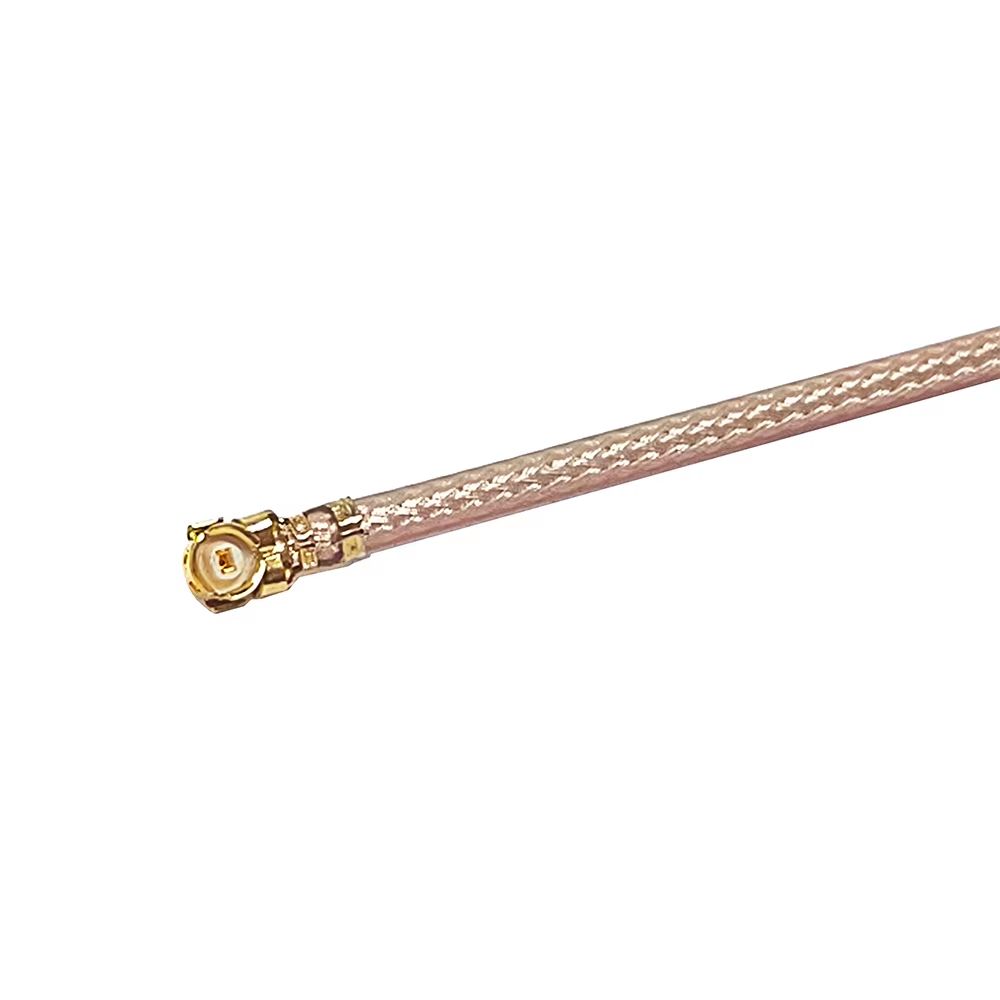
Beyond standard parts, many buyers now source custom IPEX cable assemblies: specified lengths, double-shielded low-loss cable, right-angle or straight plugs, and the opposite end terminated to SMA, U.FL, FPC antenna or board-edge connectors. Lead times for popular plug/receptacle combinations typically run a few days for stock items, with custom assemblies quoted by drawing and volume.
Key commercial terms usually offered to overseas buyers include:
MOQ from small trial lots; sample availability within days
Tape-and-reel packaging for automatic pick-and-place
Full dimensional and electrical inspection reports (VSWR/continuity test)
Incoterms: FOB / CIF / DDP; consolidated shipping by air or express
Support for NDA-protected drawings and private labelling
A Word from Our Engineering Team
"The connector is the last few millimetres of the RF chain—but it's where most link-budget problems show up. Choosing the right generation, the right cable and the right retention method matters more than the unit price."
About Us
We are a China-based manufacturer and exporter of RF connectors and coaxial cable assemblies, serving module makers, antenna suppliers and EMS partners in Europe, North America and Southeast Asia. Our product range covers IPEX/IPX/MHF-series connectors, U.FL, SMA, FPC antennas and custom RF cable assemblies. OEM/ODM orders are welcome.
Hot News
-
Unlocking the "Precision Eye" of Phased Array Radar: The Ultimate Craftsmanship of Phase-Matched Cable Assemblies
2026-09-04
-
SMC Coaxial Connectors
2026-08-23
-
What is RF coaxial connector? What are the characteristics and applications?
2025-07-01
-
BNC Connector
2024-07-22
-
SMA connector
2024-07-19
-
The difference between BNC connectors and SMA connectors
2024-07-03
-
What are the advantages of anti-interference coaxial cables
2023-12-18
-
Complete Guide to Basic Knowledge of Coaxial Connectors
2023-12-18
-
Why is the anti-interference ability of coaxial cables so strong
2023-12-18