EN
EN
 AR
AR
 BG
BG
 HR
HR
 CS
CS
 NL
NL
 FI
FI
 FR
FR
 DE
DE
 EL
EL
 HI
HI
 IT
IT
 JA
JA
 KO
KO
 NO
NO
 PL
PL
 PT
PT
 RO
RO
 RU
RU
 ES
ES
 TL
TL
 IW
IW
 ID
ID
 VI
VI
 HU
HU
 TH
TH
 TR
TR
 FA
FA
 MS
MS
 UR
UR
 HA
HA
 JW
JW
 LA
LA
 MY
MY
 KK
KK
 TG
TG
 UZ
UZ
 AM
AM
 PS
PS

SMA Coaxial Connectors
Overview
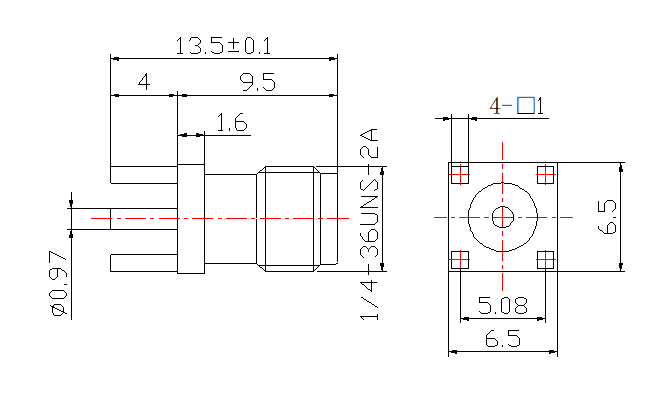
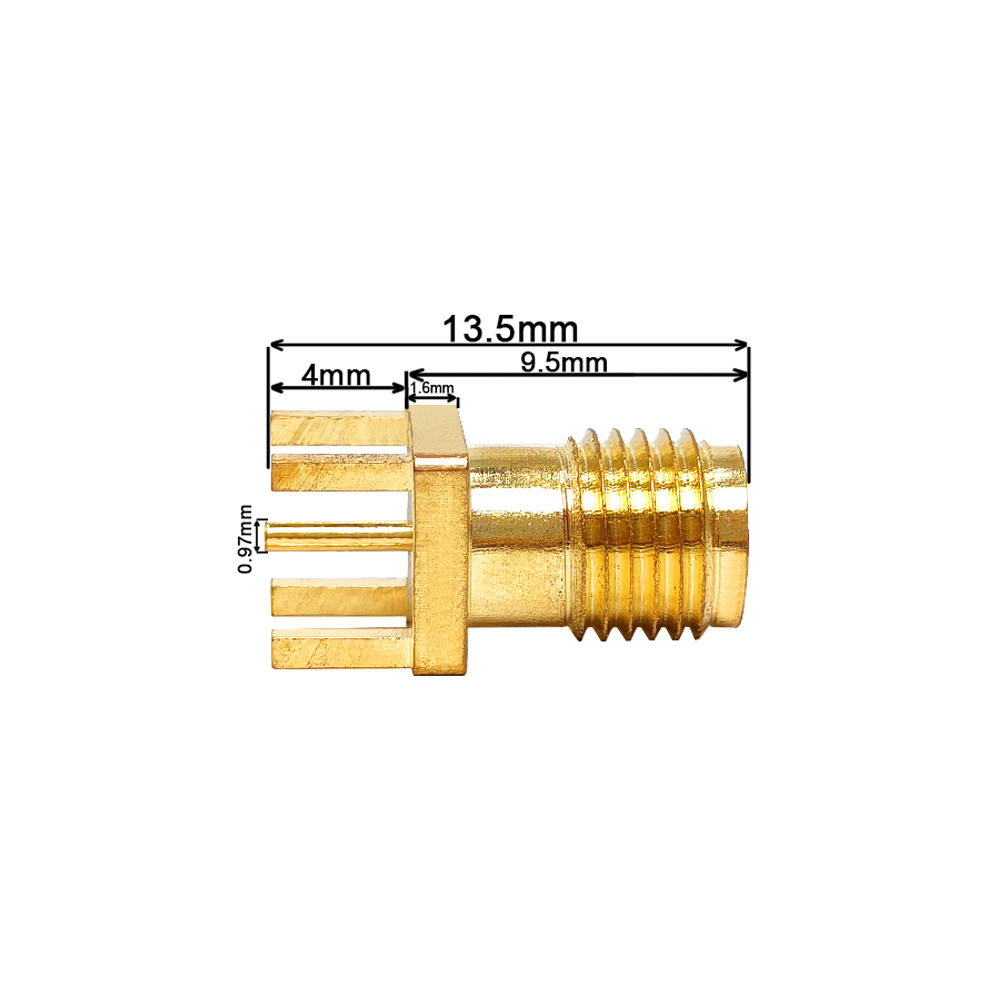
The SubMiniature version A (SMA) connector is a highly versatile, semi-precision coaxial RF connector widely used in microwave and high-frequency systems. Featuring a compact threaded coupling mechanism (1/4-36 UNS), the SMA connector is designed to deliver excellent electrical performance from DC up to 18 GHz, with precision models extending to 26.5 GHz. Its small size and superior reliability make it a preferred choice for modern telecommunications and PCB applications.
Key Features & Benefits
- High-Frequency Performance: Engineered for microwave applications, SMA connectors maintain low VSWR and minimal signal loss across a broad frequency spectrum (DC to 18/26.5 GHz).
- Compact & Lightweight: The semi-precision design offers a significant reduction in size and weight compared to N-Type connectors, making it ideal for space-constrained devices and densely populated PCBs.
- Durable Threaded Interface: The screw-on coupling mechanism ensures a stable, vibration-resistant connection, preventing accidental disconnection in critical systems.
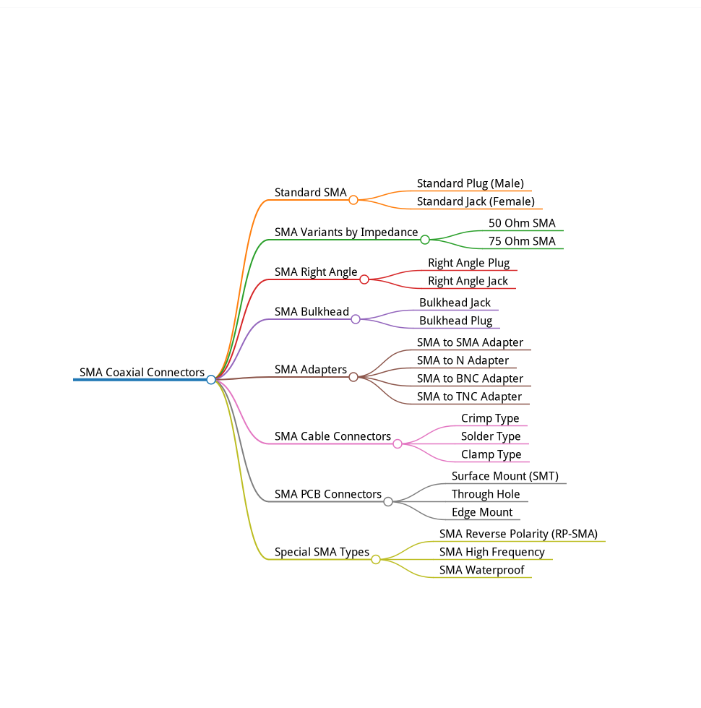
- Extensive Compatibility: Available in a vast array of configurations including Standard, Reverse Polarity (RP-SMA), Bulkhead, End Launch, and various termination styles (Solder, Crimp, Clamp) for flexible integration.
Typical Applications
- Wireless Communication Systems (WiFi, Bluetooth, Zigbee, LoRa)
- PCB Board-to-Board and Board-to-Cable Interconnects
- Mobile Devices and Antennas
- Microwave Radio Systems & Radar
- Test Instruments and Medical Devices
Technical Specifications
|
Parameter |
Specification |
|
Impedance |
50Ω (Standard) |
|
Frequency Range |
DC ~ 18 GHz (Precision up to 26.5 GHz) |
|
Dielectric Withstanding Voltage |
1000 V RMS (Min. at Sea Level) |
|
VSWR |
≤ 1.30 (Typical up to 18 GHz) |
|
Insulation Resistance |
≥ 5000 MΩ |
|
Durability (Mating Cycles) |
≥ 500 Cycles |
|
Temperature Range |
-65°C to +165°C |
|
Body Material |
Brass / Stainless Steel (Gold or Nickel Plated) |
|
Dielectric |
PTFE (Teflon) |
Comparison with Other RF Connectors
To help you select the optimal interconnect solution, here is how the SMA compares to other common RF interfaces like N-Type and BNC:
|
Feature |
SMA Connector |
N-Type Connector |
BNC Connector |
|
Connection Mechanism |
Threaded (Compact) |
Threaded (Robust) |
Bayonet (Quick connect) |
|
Frequency Range |
DC to 18 GHz (26.5 GHz Precision) |
DC to 11 GHz (18 GHz Precision) |
DC to 4 GHz |
|
Size & Form Factor |
Small, lightweight, ideal for PCBs |
Medium-sized, heavy-duty |
Medium-sized, bulky |
|
Power Handling |
Medium Power |
High Power |
Low to Medium Power |
|
Typical Applications |
WiFi Modules, GPS, Consumer Electronics |
Outdoor Base Stations, Radar |
Video, Low-Freq Test Equipment |
Selection Guide:
- Choose SMA for high-frequency, compact indoor applications, PCB modules, and consumer electronics where size and frequency are critical.
- Choose N-Type for outdoor, high-power, and harsh environment applications requiring superior waterproofing and mechanical stability.
- Choose BNC for quick-connect requirements in lower frequency (under 4 GHz) test and measurement scenarios.
Hot News
-
Unlocking the "Precision Eye" of Phased Array Radar: The Ultimate Craftsmanship of Phase-Matched Cable Assemblies
2026-09-04
-
SMC Coaxial Connectors
2026-08-23
-
What is RF coaxial connector? What are the characteristics and applications?
2025-07-01
-
BNC Connector
2024-07-22
-
SMA connector
2024-07-19
-
The difference between BNC connectors and SMA connectors
2024-07-03
-
What are the advantages of anti-interference coaxial cables
2023-12-18
-
Complete Guide to Basic Knowledge of Coaxial Connectors
2023-12-18
-
Why is the anti-interference ability of coaxial cables so strong
2023-12-18