
 EN
EN
 AR
AR
 BG
BG
 HR
HR
 CS
CS
 NL
NL
 FI
FI
 FR
FR
 DE
DE
 EL
EL
 HI
HI
 IT
IT
 JA
JA
 KO
KO
 NO
NO
 PL
PL
 PT
PT
 RO
RO
 RU
RU
 ES
ES
 TL
TL
 IW
IW
 ID
ID
 VI
VI
 HU
HU
 TH
TH
 TR
TR
 FA
FA
 MS
MS
 UR
UR
 HA
HA
 JW
JW
 LA
LA
 MY
MY
 KK
KK
 TG
TG
 UZ
UZ
 AM
AM
 PS
PS

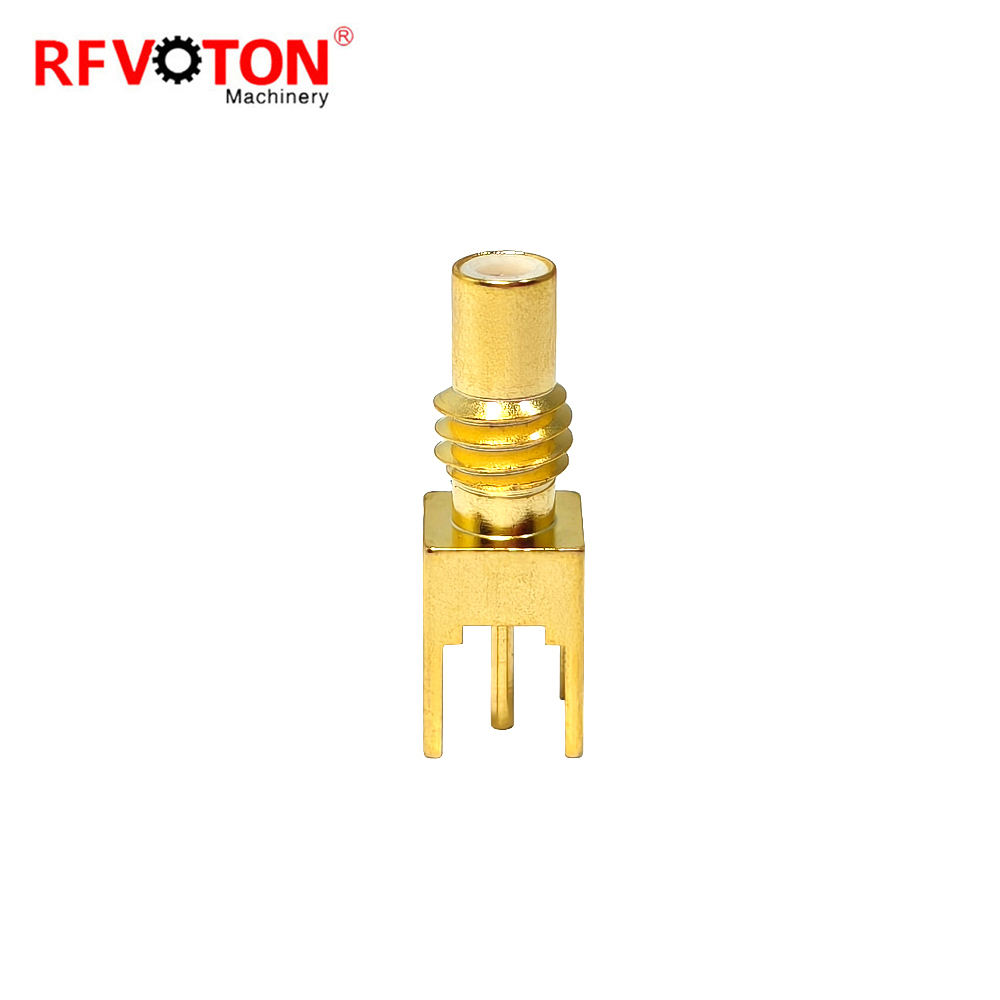
Overview
The SubMiniature version C (SMC) connector is a compact, threaded RF coaxial connector designed for high-reliability applications requiring stable connections in demanding environments. Based on the SMB connector interface but featuring a robust #10-32UNF threaded coupling mechanism, the SMC connector delivers excellent electrical performance from DC up to 10 GHz. Its superior mechanical stability and vibration resistance make it an ideal choice for critical systems where connection integrity is paramount.
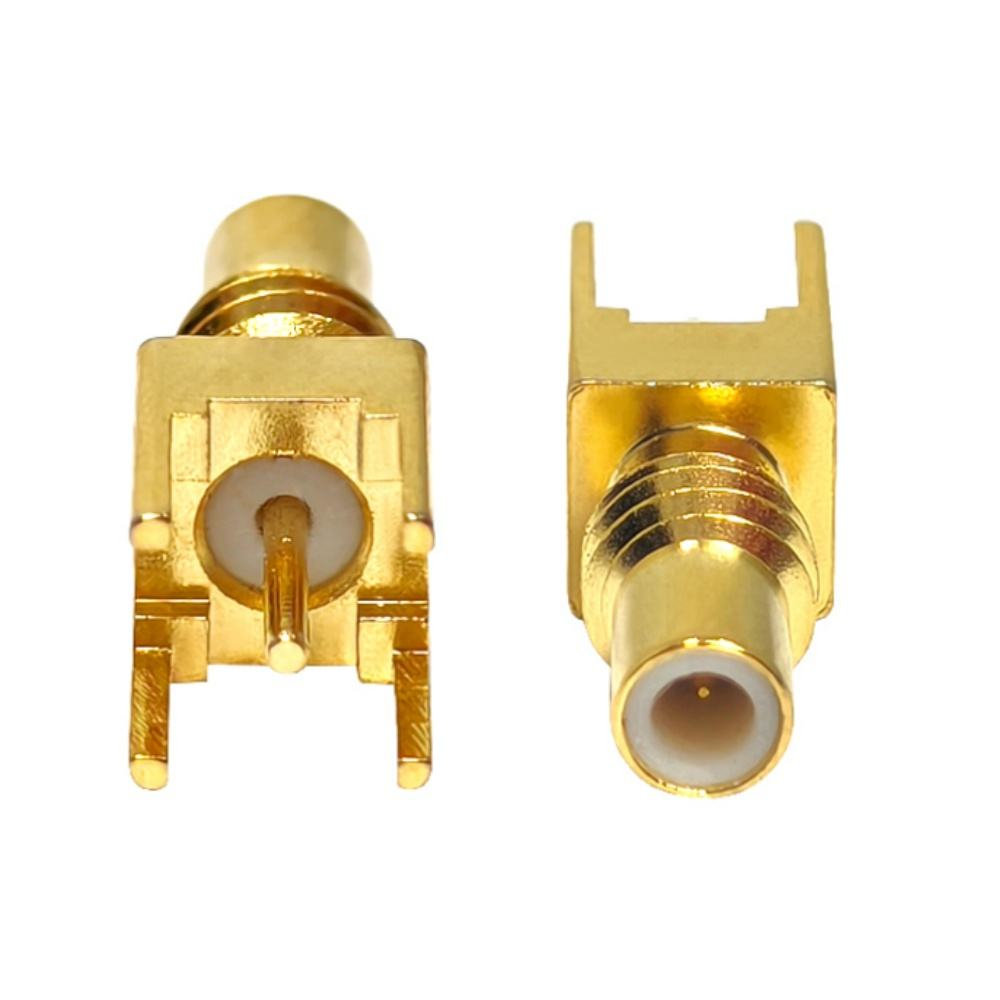
Key Features & Benefits
- Threaded Locking Mechanism: The #10-32UNF threaded coupling provides secure, vibration-resistant connections that prevent accidental disconnection, making it suitable for high-reliability applications and harsh environments.
- High-Frequency Performance: Engineered to operate efficiently across a broad frequency range (DC to 10 GHz), maintaining low VSWR and minimal signal loss for critical RF applications.
- Compact & Robust Design: Combining the small footprint of SMB connectors with the mechanical stability of threaded connections, SMC connectors offer an optimal balance of size and reliability.
- Superior Environmental Resistance: The threaded design provides excellent resistance to mechanical shock, vibration, and environmental factors, ensuring consistent performance in demanding conditions.
Typical Applications
- Telecommunications Base Stations and Infrastructure
- Aerospace and Avionics Systems
- Military and Defense Equipment
- Industrial Test and Measurement Instruments
- High-Reliability Medical Devices
- Transportation and Automotive Electronics
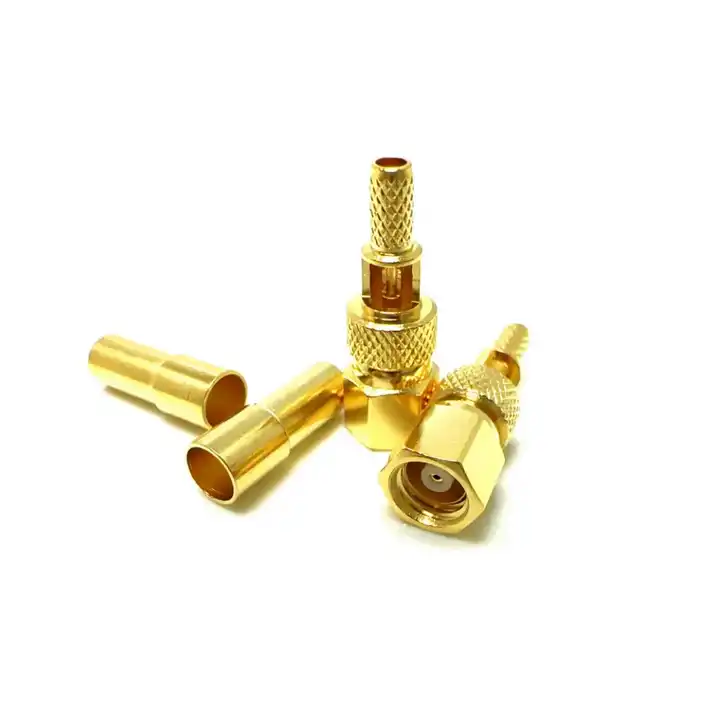
Technical Specifications
|
Parameter |
Specification |
|
Impedance |
50Ω (Standard) |
|
Frequency Range |
DC ~ 10 GHz |
|
Coupling Mechanism |
#10-32UNF Threaded |
|
Dielectric Withstanding Voltage |
750 V RMS (Min.) |
|
Working Voltage |
250 V RMS |
|
VSWR |
≤ 1.30 (Typical up to 6 GHz) |
|
Insulation Resistance |
≥ 1 GΩ |
|
Center Contact Resistance |
≤ 5 mΩ |
|
Outer Contact Resistance |
≤ 2.5 mΩ |
|
Durability (Mating Cycles) |
≥ 500 Cycles |
|
Temperature Range |
-65°C to +165°C |
|
Body Material |
Brass/Stainless Steel (Gold or Nickel Plated) |
|
Dielectric |
PTFE (Teflon) |
Comparison with Other RF Connectors
Here is how the SMC connector compares to other common RF interfaces like SMB and SMA:
|
Feature |
SMC Connector |
SMB Connector |
SMA Connector |
|
Connection Mechanism |
Threaded (#10-32UNF) |
Snap-on (Push-on/Pull-off) |
Threaded (1/4-36 UNS) |
|
Frequency Range |
DC to 10 GHz |
DC to 4 GHz |
DC to 18 GHz |
|
Vibration Resistance |
Excellent |
Moderate |
Good |
|
Mating Convenience |
Good (Secure connection) |
Excellent (Tool-free) |
Moderate (Requires torque) |
|
Size & Form Factor |
Compact, robust |
Very compact |
Small, semi-precision |
|
Typical Applications |
High-reliability systems, vibration environments |
PCB modules, frequent mating |
High-frequency, precision applications |
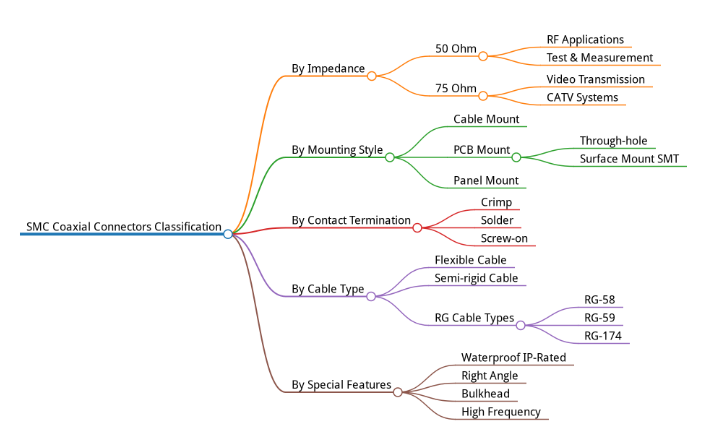
Selection Guide:
- Choose SMC for applications requiring high mechanical stability, vibration resistance, and reliable connections in harsh environments, where the frequency range up to 10 GHz is sufficient.
- Choose SMB for applications requiring frequent mating cycles, tool-free assembly, and where vibration is not a critical concern.
- Choose SMA for applications requiring the highest frequency performance (above 10 GHz) with good mechanical stability.
? Design Considerations:
When implementing SMC connectors in your designs, consider the additional space required for the threaded coupling mechanism compared to snap-on connectors. The superior vibration resistance makes SMC ideal for mobile, aerospace, and industrial applications where connection integrity cannot be compromised. For mixed-signal environments, ensure proper grounding and shielding to maintain signal integrity at higher frequencies.