
 EN
EN
 AR
AR
 BG
BG
 HR
HR
 CS
CS
 NL
NL
 FI
FI
 FR
FR
 DE
DE
 EL
EL
 HI
HI
 IT
IT
 JA
JA
 KO
KO
 NO
NO
 PL
PL
 PT
PT
 RO
RO
 RU
RU
 ES
ES
 TL
TL
 IW
IW
 ID
ID
 VI
VI
 HU
HU
 TH
TH
 TR
TR
 FA
FA
 MS
MS
 UR
UR
 HA
HA
 JW
JW
 LA
LA
 MY
MY
 KK
KK
 TG
TG
 UZ
UZ
 AM
AM
 PS
PS

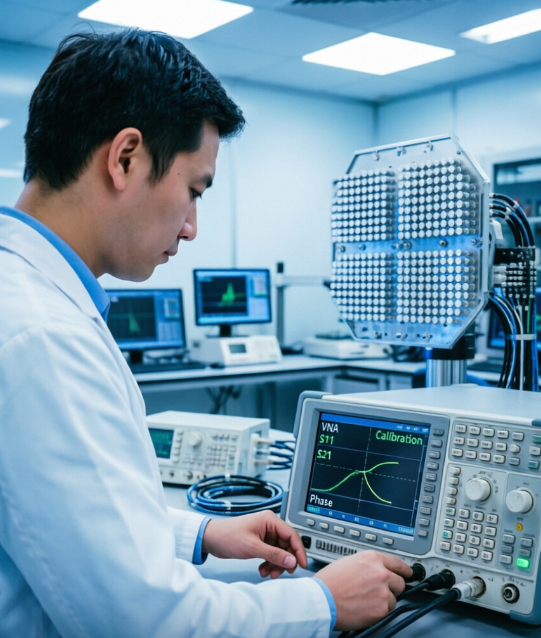
In the realms of modern defense and cutting-edge telecommunications, Phased Array Radar is hailed as the "Thousand-Mile Eye" of the battlefield, renowned for its millisecond-level beam scanning speed and exceptional accuracy. However, achieving perfect synchronization across hundreds or even thousands of signal channels requires more than just advanced algorithms—it relies heavily on the "neural network" supporting it behind the scenes: Phase-Matched RF Cable Assemblies.
Today, we invite you to delve into the technical core and uncover how these seemingly ordinary cables ensure that radar beams hit their mark with pinpoint accuracy through ultimate manufacturing precision.
1. Why is Phase Matching the "Lifeline" of Radar?
Phased array radars do not require mechanical rotation. Instead, they achieve electronic scanning of electromagnetic beams by precisely controlling the phase difference of the signals transmitted or received by each antenna element in the array.
Think of it like a highly disciplined marching band: every member's steps must be absolutely synchronized. If there are minute phase differences in the cables connecting the antenna elements, the signals will arrive at different times. This deviation directly causes the radar beam to stray from its intended direction, potentially creating severe detection blind spots. Therefore, phase matching—ensuring that the electrical lengths of multiple cables remain highly consistent—has become a core metric determining the performance of the entire radar system.
2. Pushing the Limits: What Affects the "Synchronization" of Cables?
Making the phases of different cables "identical" is not as simple as ensuring they have the same physical length. In actual production, we must overcome four major technical challenges:
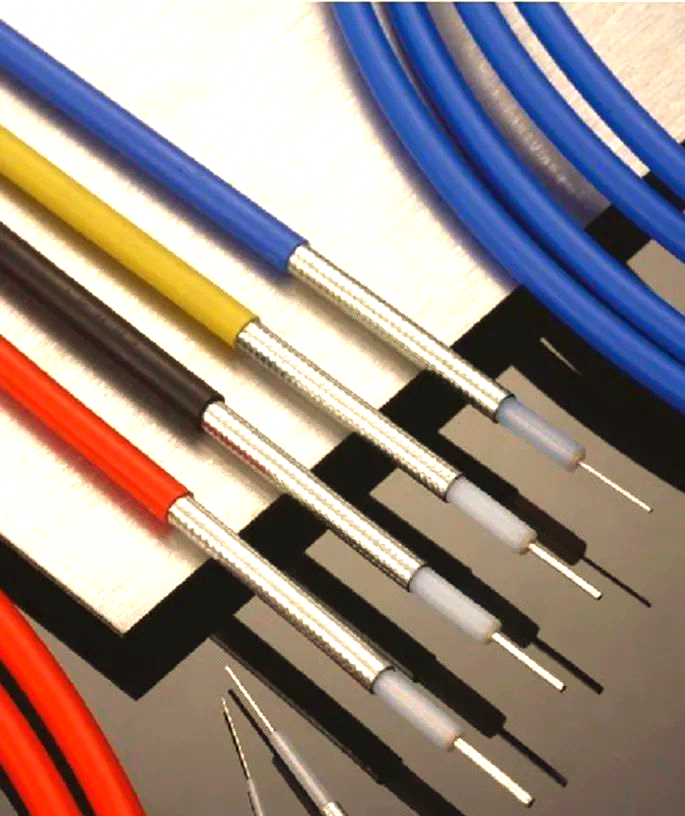
- Stability of Dielectric Materials: The dielectric constant of the cable's internal medium directly determines the signal propagation speed. High-end phase-stable cables typically use high-purity, uniformly foamed PTFE (Polytetrafluoroethylene) materials to eliminate phase drift caused by fluctuations in material density.
- Extreme Mechanical Length Tolerances: At a high frequency of 10 GHz, a physical length deviation of just 1 mm can cause a phase shift of over 10°. Therefore, the length tolerance for precision cutting must be controlled within ±0.3 mm.
- Consistency of Connector Assembly: The depth to which a connector is inserted into the cable changes the actual path of the signal. We utilize custom mechanical限位 tooling and automated crimping equipment to ensure that the assembly depth of every single cable is exactly the same.
- Interference from Environmental Factors: In real-world operations, temperature changes and cable bending can introduce new phase differences. High-quality phase-stable cables must possess excellent "temperature phase stability" and "mechanical phase stability."
|
Application Scenario |
Typical Phase Matching Requirement |
|
Ordinary Communication Arrays |
±5° ~ ±10° @ Operating Frequency |
|
High-Precision Phased Array Radar |
±2° ~ ±3° @ Operating Frequency |
|
5G Massive MIMO |
Within ±5° |
|
Electronic Warfare/Jamming Systems |
±1° or even stricter |
3. Craftsmanship: How Do We Produce "Identical" Cables?
To deliver cable assemblies that meet the rigorous demands of military-grade standards, we have established a comprehensive precision manufacturing and inspection system:
- Strict Raw Material Batch Control: All cables for the same order use dielectric, conductor, and jacket materials from the exact same production batch, eliminating material differences right from the source.
- Precision Machining & Full Welding Technology: We prioritize automated laser welding over traditional methods. Compared to standard crimping, the full welding process significantly reduces human error and ensures uniform solder joints, guaranteeing long-term phase stability.
- VNA Vector Network Analysis Screening: Before leaving the factory, every single cable assembly undergoes a strict "physical exam" using a Vector Network Analyzer (VNA). We not only measure the S21 phase curve but also perform precise grouping based on phase values, bundling the most closely matched cables into the same system.
- Environmental Stress Screening: Grouped cables are subjected to high and low-temperature cycle testing. This allows us to weed out any units that exhibit phase instability under extreme temperatures, ensuring the product remains highly matched across a wide temperature range of -55°C to +125°C.
4. Selection Advice for Engineers and Procurement Experts
If you are selecting or purchasing RF cables for Phased Array Radar, 5G Massive MIMO, or electronic warfare systems, we recommend focusing on the following key dimensions:
- Define Phase Tolerance Specifications: In your technical agreements, be sure to clearly specify the phase difference tolerance requirements at the operating frequency (e.g., high-precision radars typically require ±2° to ±3°).
- Request Actual Measurement Data: Require suppliers to provide the S21 phase curve or time-domain delay data for each cable, clearly noting the specific test conditions.
- Evaluate Phase Stability: Beyond the static matching at the factory, it is crucial to evaluate the cable's phase stability performance under dynamic bending and drastic temperature changes.
- Insist on Kit-Based Delivery: For large-scale array systems, require suppliers to deliver matched cables as complete kits, numbered by channel. They should also provide detailed data documentation to facilitate direct, error-free installation on-site.
On the path to pursuing ultimate performance, every degree of phase and every picosecond of delay matters. We remain committed to providing the most reliable interconnection solutions for your high-precision systems through exquisite craftsmanship and rigorous standards.